


How Silicone Collapsible Bottles Are Made (and How to Care for Them)
Updated: Sep 24
Take this as your nudge—your everyday decisions have more power than you think.
Caring for what you own is sustainability in action—simple, powerful, daily
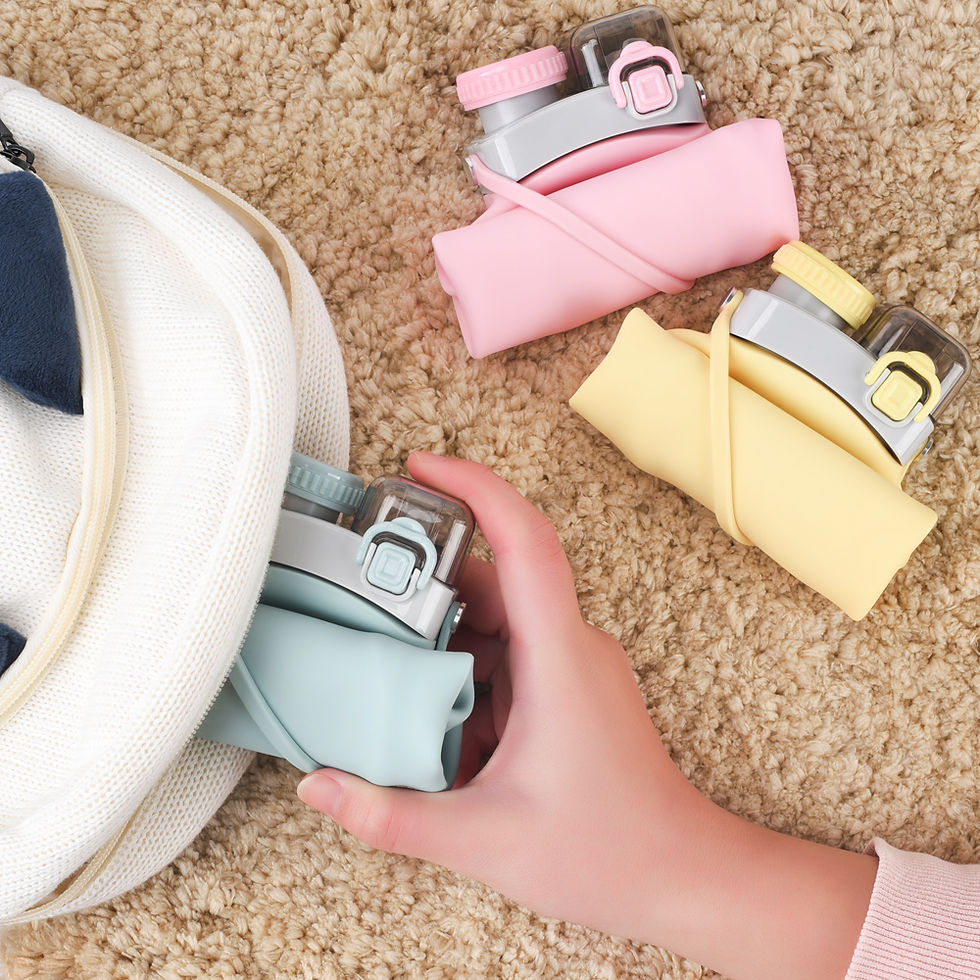
Collapsible silicone bottles look simple, but there’s a lot of material science, design work, and quality testing behind a bottle that can fold down, bounce back, and stay safe for everyday use. Here’s a transparent look at how they’re typically made—and how to use them responsibly.
1) What material is used?
Most high-quality collapsible bottles are made from food-grade silicone—usually platinum-cured silicone (preferred for low odor and high purity) or, less commonly, peroxide-cured silicone. Brands may reinforce stress points with thicker silicone ribs, and add a rigid collar or base made from polypropylene (PP) or stainless steel. Lids and seals are often PP plus a silicone gasket.
2) How are collapsible silicone bottles manufactured?
A typical production process looks like this: (1) silicone is mixed with curing agents and pigments; (2) the material is shaped using compression molding or injection molding; (3) parts are cured (heat + time) to set the silicone; (4) components are de-flashed (trimmed), washed, and sometimes post-cured to reduce residual volatiles; (5) lids, gaskets, and any rigid parts are assembled; (6) bottles are tested for leaks, odor, and durability (fold cycles, temperature resistance, and drop tests).
3) How are the colors made?
Color is usually created by mixing food-contact-safe pigments into the silicone before molding. Premium manufacturers use stable, heat-resistant pigments designed for silicone so the color stays consistent after curing and repeated washing. Some designs also use surface treatments or printed markings, but the main body color is typically ‘in-mass’ (mixed throughout the silicone).
4) How long does a silicone bottle last?
With normal use, a quality silicone bottle can last for years. Lifespan depends on thickness, how often it’s folded, exposure to oils/strong flavors, and cleaning habits. Signs it’s time to replace: persistent odor that won’t wash out, sticky/tacky surface, cracks/tears, or a seal that no longer holds.
5) How long does it take to create a design—and how many people work on it?
From first sketch to production, a new collapsible bottle design commonly takes ~3–9 months. A small project might involve 4–8 people (industrial designer, mechanical/packaging engineer, materials/quality specialist, sourcing/production manager, and marketing/brand). Larger brands may involve 10+ people when you include compliance testing, logistics, and retail packaging.
6) Which countries develop and manufacture these products?
Design and development can happen anywhere, but many collapsible silicone bottles are engineered and/or manufactured in China, with additional production and design activity in the United States, Canada, Germany, the UK, Japan, and South Korea. Final quality depends more on the manufacturer’s standards and testing than on the country alone.
7) How to clean a silicone collapsible bottle
For daily cleaning: warm water + mild dish soap, then rinse thoroughly and air-dry fully with the bottle open. For deeper cleaning: soak in warm water with baking soda, or use a bottle brush for the folds and threads. If the bottle is dishwasher-safe (check the brand), place it on the top rack and remove the lid gasket occasionally to clean underneath.
8) How long can you keep liquid inside?
For plain water, many people keep it for a day, but best practice is to refresh daily. For flavored drinks (juice, tea, electrolyte mixes), treat it like any reusable bottle: refrigerate when possible and aim to consume within 24 hours. For milk-based drinks or anything highly perishable, it’s safest to avoid long storage and clean promptly after use.
9) What liquids can be stored in silicone bottles?
Generally suitable: water, iced tea, coffee (if the bottle is rated for hot liquids), diluted juices, and sports drinks. Use caution with: oily liquids, strongly colored liquids (they can stain), and very acidic liquids stored for long periods. Avoid storing carbonated drinks unless the bottle is explicitly designed for pressure.
10) Fridge, dishwasher, freezer—are they safe?
Refrigerator: yes. Dishwasher: often yes (top rack), but always follow the specific product instructions. Freezer: many silicone bottles tolerate freezing, but leave headspace for expansion and avoid freezing with the lid fully sealed to reduce stress on seams and gaskets.
11) Are they really recyclable and eco-friendly?
Silicone is durable and can reduce single-use plastic waste, but it’s not widely accepted in curbside recycling. Some specialty programs recycle silicone, and some brands offer take-back options. Eco-friendliness comes mainly from longevity: one well-made bottle used for years can outperform many disposable bottles. Look for: food-grade certification, repairable/replaceable parts (gaskets), minimal packaging, and a brand that supports end-of-life solutions.
12) Advantages vs. similar products
Compared with rigid plastic: silicone can be more durable over time, foldable for travel, and often more temperature tolerant. Compared with stainless steel: silicone is lighter and collapsible, though steel may resist staining/odor better. Compared with glass: silicone is far more impact-resistant and travel-friendly.
A few suggestions you might like
• Add a small bottle brush to your routine—folds and threads stay fresher. • If you notice odor, do a baking-soda soak overnight and air-dry fully. • Choose lighter colors if you plan to store coffee/tea often (less visible staining). • Keep an extra gasket on hand—most leaks come from worn seals.
At Arts Designs, we care about the details that make everyday choices easier on you—and gentler on the planet. If you’re switching to reusables, thank you. Every refill is a small act of consistency, and those small acts add up to real change.
You’ve got momentum—keep choosing solutions that feel smart and sustainable.
Official reference: Guadeloupe Islands Tourism Board — https://www.lesilesdeguadeloupe.com/en/
Explore more eco-friendly travel ideas here: Eco Travel Hub — https://www.artsdesigns.store/ecotravelhub


Comments